
Search results
-
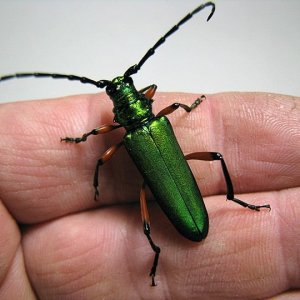
P_suaveolens_female_02.jpg
- Goliathus
- Media item
- Comments: 0
- Media category: Beetle Photos
-
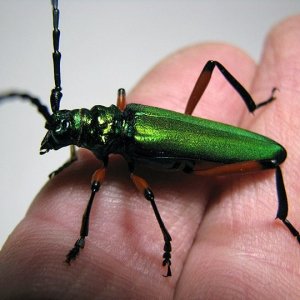
P_suaveolens_female_03.jpg
- Goliathus
- Media item
- Comments: 0
- Media category: Beetle Photos
-
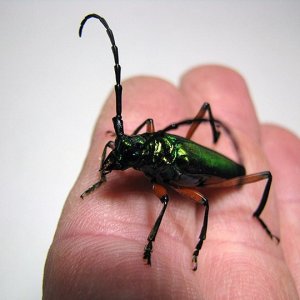
P_suaveolens_female_04.jpg
- Goliathus
- Media item
- Comments: 0
- Media category: Beetle Photos
-
G
Mydas fly (Mydas clavatus)
A large Mydas Fly (Mydas clavatus) that I found today. I see these flies every summer, usually around wood piles. The larvae live in rotting wood or rich organic soil, where they are predatory on scarab beetle larvae. The adults (which mimic spider wasps such as Anoplius spp.) have an...- Goliathus
- Thread
- Replies: 3
- Forum: Other Invertebrates
-
G
Bumelia longhorn (Plinthocoelium suaveolens) (video)
Short video of a Bumelia longhorn (Plinthocoelium suaveolens), found today. Both sexes are iridescent metallic green, with red and black legs. Males (like this one) have extremely long antennae. Although their host tree is common in my area, I've only ever found a few of these beetles...- Goliathus
- Thread
- Replies: 6
- Forum: Beetle Photos
-
G
Buprestis rufipes and Stenelytrana gigas (video)
Video of a couple of interesting beetles found in the backyard this afternoon - a Jewel Beetle (Buprestis rufipes) and a giant lepturine longhorn (Stenelytrana gigas). Stenelytrana mimics the Tarantula Hawk Wasp (Pepsis spp.), which is said to have one of the most painful stings of any insect...- Goliathus
- Thread
- Replies: 12
- Forum: Beetle Photos
-
G
Chrysina beyeri (video)
More of my Chrysina beyeri (Purple-legged Jewel Scarab) are starting to emerge. Based on their size, I think that most if not all of the ones shown in this video are males, but I'm really not certain. I expect that larger specimens will be emerging a bit later (in another 4 to 6 weeks or so). ...- Goliathus
- Thread
- Replies: 8
- Forum: Beetle Photos
-
G
Papilio polyxenes (Black Swallowtail)
Papilio polyxenes (Black Swallowtail) chrysalis, from a caterpillar I raised; adult should emerge in a couple of weeks or so.- Goliathus
- Thread
- Replies: 2
- Forum: Other Invertebrates
-
G
Buddleia davidii
Another of my Buddleia bushes is starting to flower - this one is an old cultivar (Black Knight) that's been popular for decades, and has one of the darkest colours among the 200+ varieties that have been produced.- Goliathus
- Post #10
- Forum: Other Discussions
-
G
Chrysina woodi (video)
A short video (silent) of a couple of captive-reared Chrysina woodi (Blue-legged Jewel Scarab) that have just emerged. They're found in several mountain ranges in West TX and Southeastern NM. Even with video, it's hard to show just how intensely blue the tarsi actually are; incredibly metallic...- Goliathus
- Thread
- Replies: 3
- Forum: Beetle Photos
-
G
Buddleia davidii
Yes - they do give off a very noticeable smell, similar to lilac (Syringa spp.). Undoubtedly, this is why they attract butterflies so strongly. Some more photos of my dwarf Buddleia (cultivar ID: Buddleia x 'SMNBDL' ppaf), which is starting to flower more now. Interestingly, although it's...- Goliathus
- Post #9
- Forum: Other Discussions
-
G
Chrysina beyeri
A Purple-legged Jewel Scarab (Chrysina beyeri) (captive reared) that just emerged today. Some coleopterists are of the opinion that it's the most beautiful of the US Chrysina spp.- Goliathus
- Thread
- Replies: 9
- Forum: Beetle Photos
-
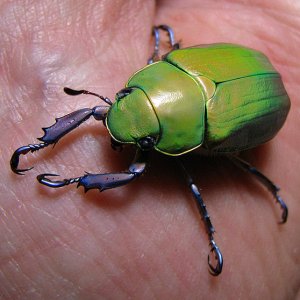
beyeri_03.jpg
- Goliathus
- Media item
- Comments: 0
- Media category: Beetle Photos
-
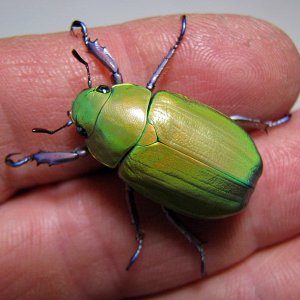
beyeri_02.jpg
- Goliathus
- Media item
- Comments: 0
- Media category: Beetle Photos
-
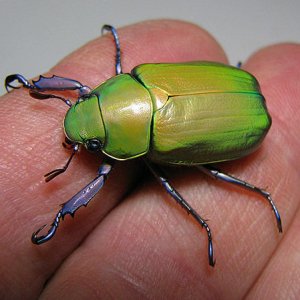
beyeri_01.jpg
- Goliathus
- Media item
- Comments: 0
- Media category: Beetle Photos
-
G
Buddleia davidii
Several new (new to me, at least) cultivars of Buddleia davidii that I've started working with this year - a standard-sized pale blue, standard-sized fuchsia, and a dwarf amethyst variety.- Goliathus
- Thread
- Replies: 10
- Forum: Other Discussions
-
G
Alaus lusciosus
A large female Alaus lusciosus, one of the southwestern species of eyed elaters. Similar to A. zunianus, apart from some slight differences in the markings.- Goliathus
- Thread
- Replies: 6
- Forum: Beetle Photos
-
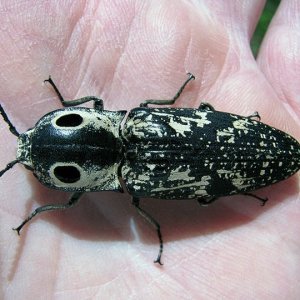
A_lusciosus.jpg
- Goliathus
- Media item
- Comments: 0
- Media category: Beetle Photos
-
G
Emerald Euphoria (Euphoria fulgida)
Euphoria fulgida, the Emerald Euphoria - captive bred, generation F1. The initial breeding stock was collected from thistle flowers in the Southern Great Plains. Adults are surprisingly long-lived. These emerged a year ago, and are still doing well.- Goliathus
- Thread
- Replies: 8
- Forum: Beetle Photos
-
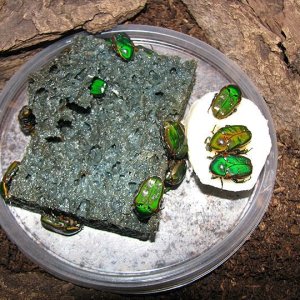
fulgida_(cap_bred).jpg
- Goliathus
- Media item
- Comments: 0
- Media category: Beetle Photos